

Top 7 Tips to Keep Food Fresh at Your Eureka, CA Event — Safe, Flavorful Catering
Keeping food fresh at an event in Eureka matters for both safety and flavor—especially with Mexican dishes that depend on bright produce and timely finishing. This guide gives event planners and hosts clear, practical steps to reduce spoilage, control temperatures, and coordinate service so tacos, salsas, guacamole and masa-based items arrive tasting their best. You’ll find actionable advice on menu planning and local sourcing, temperature control, avoiding cross-contamination, smart storage, hygienic serving, timing and delivery logistics, and the local food-safety rules that apply in Humboldt County. Each section explains what to do and why it works, with examples suited to coastal Northern California. At the end, note a local option: Esmeralda’s 2.0, a family-owned Eureka caterer known for fresh ingredients and customizable Mexican menus, can help bring these tips to life. The article then walks through seven focused H2 topics with step-by-step subpoints and quick-reference tables you can use on the day of the event.
How can smart menu planning and local sourcing keep your event food fresh in Eureka?
Smart menu planning picks dishes and ingredients that spend less time in temperature-sensitive stages, reduce handling, and make the most of nearby produce. Choose items that travel well—think slow-simmered proteins, grilled vegetables, and composed tacos finished on-site—so you avoid long hot- or cold-hold windows and lower spoilage risk. Sourcing locally shortens the route from farm to kitchen, which preserves texture and flavor and limits time outside refrigeration. Planning around seasonal availability from Humboldt County suppliers also lets you prepare smaller batches and rotate offerings, keeping food fresher across a long service.
What are the benefits of using fresh, local ingredients for catering?
Local, fresh ingredients give firmer texture and brighter flavor because they spend less time in transit and are often harvested at peak ripeness—this matters for staples like tomatoes, cilantro and citrus. Fewer steps in the supply chain also mean fewer temperature transitions, which reduces chances for spoilage and bacterial growth during transport to Eureka venues. Working with local producers makes last-minute substitutions easier, lets caterers stage smaller replenishments, and helps maintain quality throughout multi-hour events. The result: better tasting food and fewer operational headaches from extended holding.
How to customize your menu for seasonal and authentic Mexican dishes
Build menus that pair stable components with on-site finishing: prep proteins and vegetables safely for transport, then finish tacos, salsas and guacamole at service to preserve texture and acidity. Favor preparations that tolerate short holding—braised meats, grilled veg, and roasted salsas—while limiting dishes that fall apart quickly, like stuffed chiles. Produce salsas and guacamole in small batches timed for service, and plan wipe-and-rotate cycles so exposed trays are swapped frequently. Flexibility that uses local seasonal produce reduces storage time and ensures guests taste ingredients at their peak.
What are the best temperature-control practices to maintain food freshness at events?
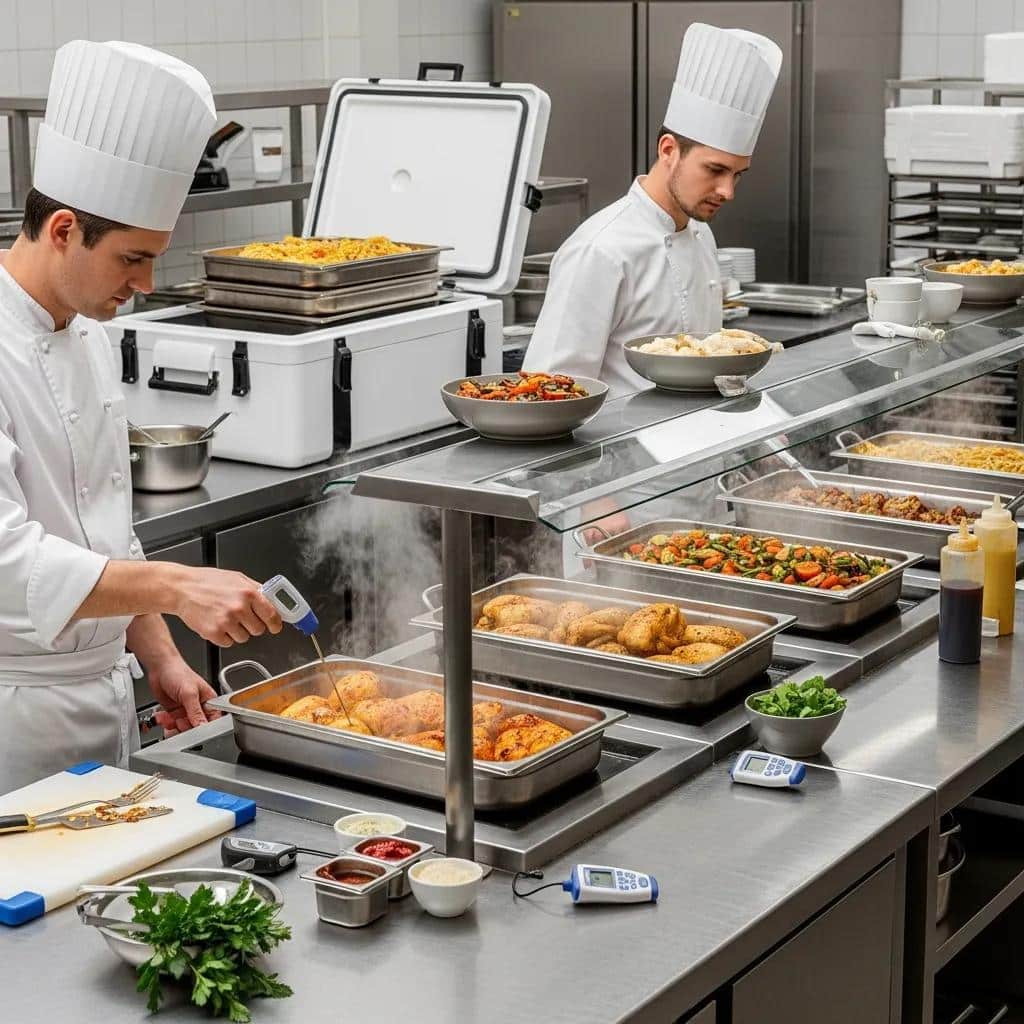
Temperature control slows bacterial growth and protects texture by keeping hot foods hot and cold foods cold through staging, transit and service. The idea is simple: maintain proper hot and cold zones to slow pathogen replication and enzymatic breakdown. Use the right equipment, pre-condition containers, and check temperatures routinely so insulated boxes, refrigerated carriers and hot-holding units do their jobs. Building temperature checks into service routines creates accountability and lets staff act quickly if something drifts out of range.
How do you safely keep hot and cold foods at the right temperatures?
Pre-heat hot-holding pans and pre-chill insulated carriers before loading food, then monitor core temperatures often with calibrated thermometers. Stage warming and cooling—chill items to service temp in a commercial refrigerator, transport in refrigerated carriers, and finish on-site within a tight window—to minimize time in the temperature “danger zone.” Keep hot and cold items in separate containers and place temperature logs at service stations so attendants can verify conditions hourly. These routines support consistent quality and provide useful documentation for venue managers or inspectors.
Before the quick reference table below, here’s a short list explaining what the table shows and why it matters for event operators.
- The table lists common Mexican catering items, their safe holding temperatures, and recommended transport/service equipment.
- Each row matches the food type to practical gear you can source or request from your caterer.
- Use this reference when planning and during service to confirm correct handling and reduce risk.
This simple table helps planners and caterers match equipment to menu items so food spends less time in the danger zone during service.
How can you prevent cross-contamination and ensure safe food handling at your event?
Preventing cross-contamination means keeping raw and ready-to-eat foods separate, using dedicated tools and surfaces, and enforcing strong staff hygiene. Isolate contamination sources and apply barrier controls—color-coded cutting boards, single-use gloves and sanitized utensils—to reduce the chance harmful organisms reach finished dishes. Clear staff roles and guest-facing signage support safe handling during buffets or plated service. These controls are especially important for frequently handled condiments like salsas and guacamole that are served chilled or at ambient temps.
What hygiene practices should caterers and guests follow?
Caterers should enforce regular handwashing, glove changes when switching tasks, and the use of sanitized utensils for each dish. Guide guests to use serving utensils and avoid bare-hand contact with shared foods. Train staff on critical control points—such as when to change gloves after handling raw proteins or trash—and provide visible hygiene stations to encourage compliance. Simple barriers like sneeze guards and staffed service points further reduce guest contact and reinforce good practices. Together, these routines protect safety and build guest confidence.
How to handle Mexican ingredients like salsa to avoid contamination
Treat high-contact condiments—salsa and guacamole—as higher risk: make them in small batches, keep them chilled, and rotate replacement trays often to limit exposure. Acidifying salsas with lime can slow bacterial growth but isn’t a substitute for proper temperature control and handling. Use portioned serving containers, replace communal bowls regularly, and ensure servers use fresh utensils when replenishing. Those focused steps reduce contamination risk and keep those bright companion flavors tasting fresh.
What are effective food storage solutions to preserve freshness before and during events?
Effective storage pairs refrigeration, airtight containers, and climate-aware staging to protect ingredient quality before transport and during service windows. Refrigeration slows enzymatic and microbial activity; airtight containers cut oxygen exposure and moisture loss that damage texture and flavor. In Eureka’s coastal climate—where humidity and temperature swings can be moderate—insulated containers and cold packs help hold temps steady during short moves. Labeling, first-in-first-out rotation and clear staging areas reduce mistakes and make it easy to swap items right before service.
Which storage methods work best for catering ingredients in Eureka’s climate?
Keep perishables in commercial refrigeration until the last responsible moment; use refrigerated transport when travel is more than a few minutes and add insulating wraps or ice packs for short transfers. Store leafy herbs in breathable containers with a slightly damp paper towel and cut fruits in airtight containers to balance moisture and airflow. Control humidity for items like tortillas and masa—keep them in airtight containers with slight ventilation to avoid sogginess or drying. These approaches match storage to local conditions and limit quality loss during setup.
How do airtight containers and refrigeration extend food quality?
Airtight containers reduce oxygen exposure that speeds oxidation and microbial growth, preserving color, texture and flavor in salsas, cut produce and cooked fillings. Refrigeration slows enzymatic breakdown and bacterial replication by lowering reaction rates, extending freshness windows for perishable items. Combined, airtight sealing and cold storage work best for prepped components—marinated veg or proteins—that will be finished onsite. Use clear labels with prep and use-by timestamps so staff rotate trays and keep quality consistent through service.
This storage table gives planners a quick sense of how long core ingredients stay at peak quality and which containers and staging routines work best during your event timeline.
What are safe serving practices to keep event food fresh and hygienic?
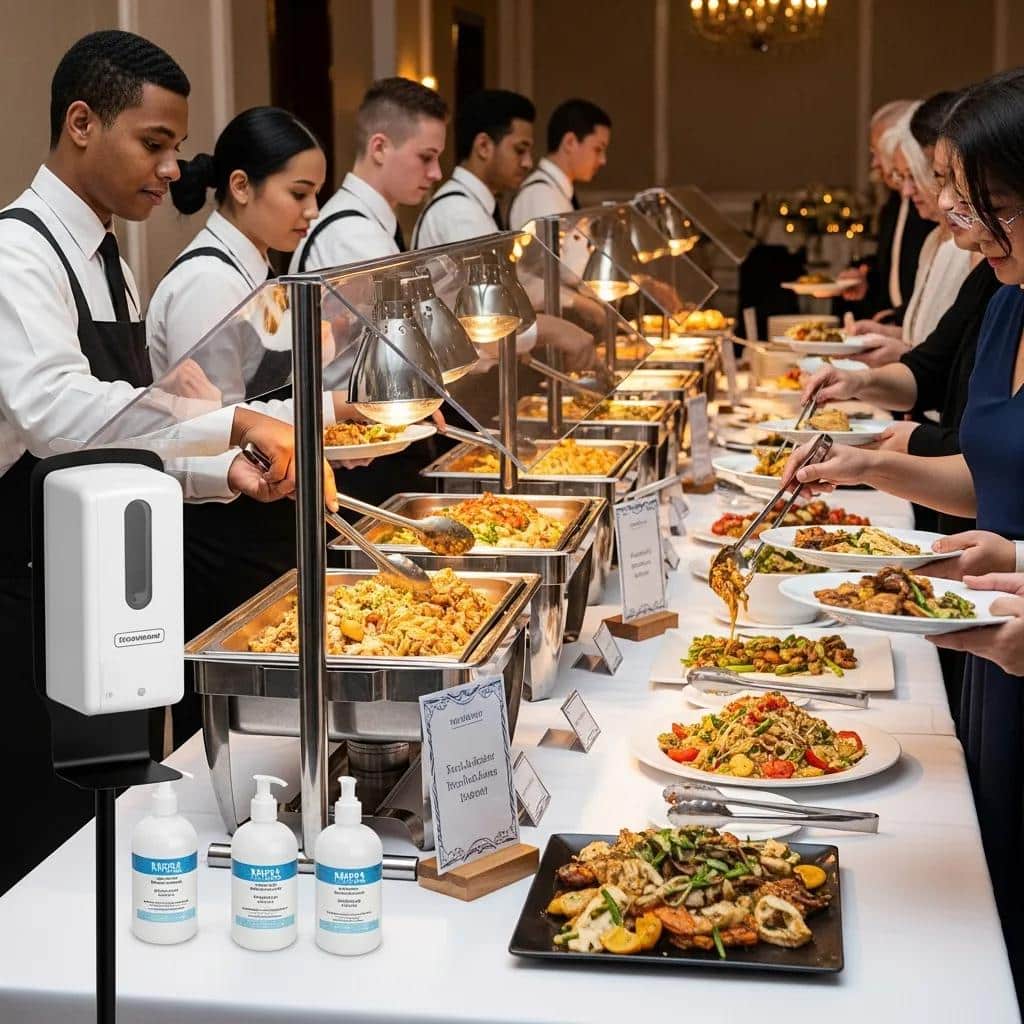
Safe serving mixes physical barriers, utensil rules and service styles that limit guest handling and maintain temperatures. Sneeze guards, staffed lines, and pre-plated or portioned options reduce guest contact. Rotate small batches and replace exposed trays often so food stays appealing and less time sits at room temperature. Equip stations with thermometers and sanitation supplies so attendants can monitor conditions and pull or refresh items when needed.
How do buffet safety measures like sneeze guards protect food?
Sneeze guards act as shields that cut droplet deposition on exposed foods and help define a controlled service zone where attendants manage portions and utensils. Place them 7–12 inches above the food and angle them to intercept direct sneezes or coughs; combine this with attendant supervision to keep guests from leaning over dishes. For smaller gatherings where full sneeze guards aren’t practical, use individually portioned servings or server-attended stations to achieve the same protection. These steps reduce contamination risk and make it easier to meet venue or health-department expectations.
What utensils and serving techniques prevent foodborne illness?
Designate one utensil per dish and swap utensils each time you replenish to avoid cross-contact. Use long-handled tongs or scoops to minimize bare-hand contact. Servers should wear single-use, food-grade gloves and change them frequently—especially after touching non-food items or handling money. For high-risk foods, consider plated service or pre-portioned cups to remove shared utensils entirely. These practices create clear boundaries between guests and food, limiting contamination and simplifying sanitation.
- Proper utensils and serving workflows prevent cross-contact and maintain food safety:
Designate one utensil per dish and replace utensils when replenishing trays.
Use server-attended stations for high-risk items to minimize guest handling.
Offer single-use options for condiments or utensils when appropriate.
Following these serving protocols helps keep each plate safe and attractive from the first guest to the last.
How does timely preparation and delivery impact food freshness for Eureka events?
Timing preparation and delivery to the event schedule means finishing dishes as late as safely possible and doing final assembly on-site so food hits the table at peak flavor and texture. Time-temperature control is the core idea: shorten the interval between final cook, transport and service to reduce danger-zone exposure and protect delicate items like tortillas, salsas and garnishes. Clear timelines, a single point of contact between caterer and host, and contingency plans for traffic or venue delays preserve freshness and reduce the need for extended holding that can dry or overcook food.
What are best practices for coordinating food prep and event timing?
Work backwards from service time to map prep, load, transit and on-site finishing windows, and put those steps into a staging checklist with built-in buffer time for delays. Timelines vary by event size but should include final warm-up or crisping within 10–30 minutes of service for items that benefit most from on-site finishing. Name a single point of contact for timing updates so the kitchen can adapt production if the schedule shifts. These planning steps cut unnecessary holding and help ensure dishes are served at their best.
How does Esmeralda’s 2.0 ensure fresh food delivery for local events?
Esmeralda’s 2.0 coordinates preparation and timed delivery to keep Mexican catering items fresh across Eureka and Humboldt County by staging final assembly close to service and using insulated transport to protect temperatures. Their process includes customizable menus that allow per-item finishing on-site, hourly monitoring of holding temps during service, and clear communication with event hosts about arrival windows and setup needs. For local events they size batches and replenishment cycles to match guest flow and use defined handoff procedures so food moves quickly and safely from kitchen to service. If you’d like help putting these timing strategies into practice, Esmeralda’s 2.0 can assist—contact them to get started.
What local food-safety regulations should you follow for catering in Eureka, CA?
Eureka and Humboldt County rules emphasize temperature control, hygienic handling, permitted venue requirements, and timely permit acquisition to protect public health at catered events. Following those rules reduces foodborne illness risk and aligns operations with inspections by the Humboldt County health department and federal guidance from agencies like the FDA and USDA on sanitation and temperatures. Event hosts should confirm venue-specific rules—some parks or halls require extra permits or on-site facilities—and work with caterers to document food-safety plans. Being proactive about permits and local guidelines prevents last-minute problems and supports safer service for attendees.
What are key Eureka and Humboldt County food-safety guidelines for events?
Typical guidelines include keeping hot and cold foods at proper holding temperatures, separating raw from ready-to-eat items, providing handwashing or sanitizer stations, and ensuring catering operations have the permits required for the venue. Inspectors often expect temperature logs and proof of a permitted kitchen. Ask caterers for documentation of their practices and discuss venue infrastructure early so you can meet requirements. Following these steps reduces compliance risk and protects guest health.
How to obtain catering permits and comply with health-department rules
Start by contacting the Humboldt County Department of Health or your venue manager well before the event to confirm paperwork, lead times and any inspections. Gather documentation like a food-safety plan and proof of a permitted kitchen. Typical steps include submitting an application, providing a menu and service plan, and scheduling inspections if required; be ready to show how you’ll handle temperature control, handwashing and waste disposal during the event. Allow for lead time and keep open lines with your caterer and the health department to resolve questions quickly—being proactive smooths approvals and cuts last-minute issues.
- Common permit and compliance checklist:
Confirm venue permit requirements and submit applications early.
Provide a food-safety plan covering temperature control and cross-contamination prevention.
Keep documentation—temperature logs and staff training records—available for inspection.
These steps simplify regulatory compliance and help your event run smoothly under local food-safety expectations.
This menu-focused table links dish choices to local sourcing and practical prep notes so planners can match menu selection with freshness-preserving tactics.
Frequently Asked Questions
What are the key factors to consider when selecting a caterer for an event in Eureka?
Look for a caterer with experience using local ingredients, flexible menus, and a strong track record on food safety. Ask about seasonal sourcing, temperature-control procedures and how they prevent cross-contamination. Check reviews and references for reliability and service quality. A caterer who communicates clearly and adapts to your needs will make the event easier and more successful.
How can I ensure my guests have a safe dining experience at my event?
Require staff hygiene routines—regular handwashing, glove changes and sanitized utensils—provide guest hand-sanitizer stations, and use serving methods that limit bare-hand contact. Monitor food temperatures to keep hot foods hot and cold foods cold. Train staff on food-safety protocols and make sure you have the right equipment and personnel to maintain those standards throughout the event.
What should I do if my event is outdoors and the weather is unpredictable?
Have contingency plans: rent tents or canopies to shield food and guests from sun or rain, use insulated transport to hold temperatures, and monitor forecasts so you can adjust setup or menu timing. Communicate with your caterer about possible changes and plan for extra covers, ice packs or warmers depending on conditions.
How can I effectively communicate my catering needs to the caterer?
Give your caterer a clear event brief: guest count, dietary restrictions, preferred menu items and service style (buffet, plated, family-style). Share timelines for prep, delivery and service, and schedule regular check-ins before the event. Clear, early communication helps avoid surprises and makes coordination on the day much smoother.
What are some common mistakes to avoid when planning catering for an event?
Avoid underestimating guest numbers, ignoring dietary restrictions, and making last-minute menu changes. Don’t overlook temperature control and storage plans—especially for outdoor events—and be sure you have enough trained staff to serve and monitor food safely. Planning for these details prevents most common problems.
How can I incorporate local flavors into my event catering?
Work with your caterer to showcase seasonal ingredients from Eureka and Humboldt County—local produce, meats and traditional Mexican preparations highlight regional character. Consider signature cocktails or desserts using local fruit or herbs. Featuring local flavors supports nearby farmers and gives guests a memorable, place-based dining experience.
Conclusion
Fresh food at your Eureka event keeps guests happy and safe. With smart menu planning, local sourcing and consistent temperature and hygiene practices, you can serve vibrant Mexican dishes that hold up through setup and service. Working with a trusted local partner like Esmeralda’s 2.0 can simplify logistics and help you deliver a delicious, safe experience for attendees. Reach out to learn how they can support your next event.